A report card tells you what a child scored. It rarely tells you what a teacher actually noticed that week — the child who went quiet after recess, or the one who finally raised their hand for the first time all term.
That gap is worth sitting with. Report cards are built to summarize performance at a fixed point in time, not to capture the small, human observations that actually shape how a child is doing. A genuine holistic approach to teaching lives largely in that unrecorded space — the part of a child’s term that never quite makes it onto paper, the part that reflects child development beyond academics.
Take your time to understand what teachers actually notice day to day, and why that matters just as much as the grade at the top of the page.
What a Report Card Is Actually Built to Measure
Report cards do a fairly narrow job, and they do it on purpose. They summarize subject performance at a specific moment — end of term, end of year — condensed into a mark or a grade.
Even where comments exist, they often lean on classroom behaviour nearly as much as content mastery. A note like “engaged and asks good questions” or “needs to focus more in class” says something about punctuality and attitude — not necessarily about whether a child actually understood the material, or how they’re doing as a person that term. This is really where education beyond academic performance starts to matter more than the grade itself.
This isn’t really a flaw in the system. It’s just a design limitation. A report card was never built to hold everything a teacher knows about a child — only the part that fits into a grid.
The Things Teachers Notice First
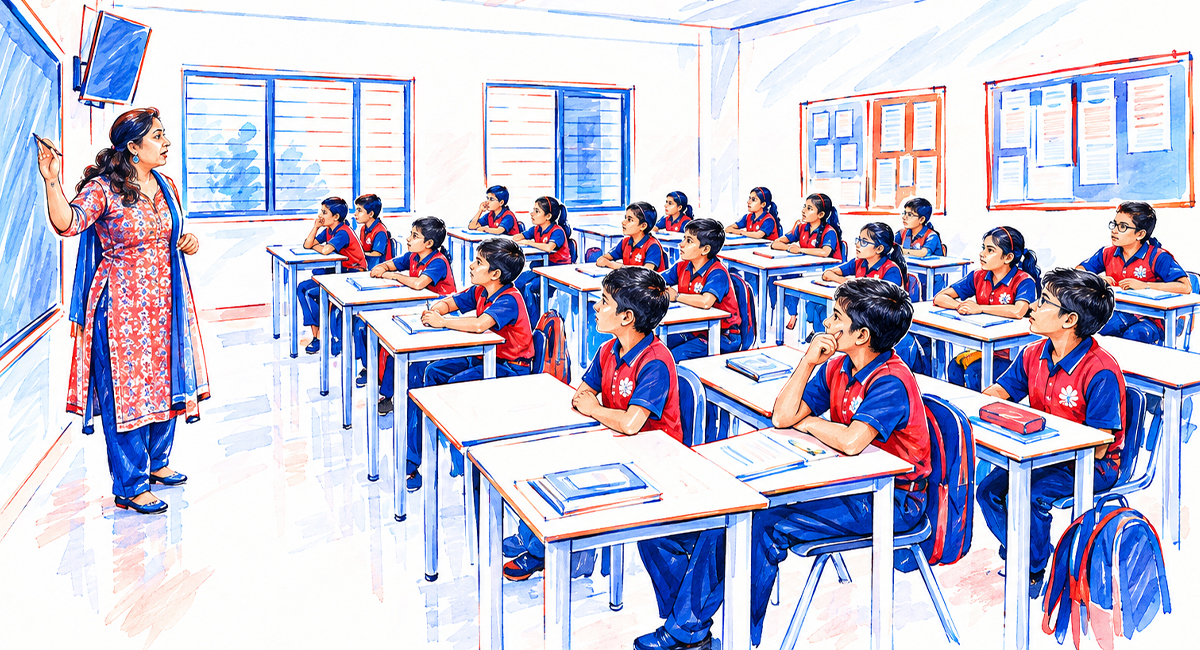
Teachers are often the first adults to notice a shift in a child, sometimes weeks before it becomes a pattern a parent would recognize at home. Kids behave differently across contexts, and a classroom with its group work, its social dynamics, its daily rhythm reveals things a living room doesn’t always show.
A few things this looks like in practice:
- A child who’s stopped asking the questions they used to ask so freely
- A child who’s suddenly more withdrawn during group work, even if their homework still comes in on time
- A child who’s quietly become the one classmates turn to for help — a shift in social standing that never shows up as a metric
None of this fits neatly into a report card’s format. And yet it often says more about how a child’s term actually went than a subject score does. This is, in many ways, how teachers support holistic development long before it ever becomes visible to a parent.
Why This Gap Exists
Grading systems are built for consistency and comparison — the same scale applied across every student, every subject, every term. That consistency is useful, but it comes at a cost: nuance doesn’t survive translation into a number.
There’s a real, documented tension here. Teachers who lean into more observation-based, holistic practice often find it genuinely difficult to translate what they’re actually seeing into a standard reporting format — the two approaches don’t always speak the same language. One teacher, reflecting on this exact friction, put it simply: can the attributes of oranges be fairly measured by criteria built for grapes?
The result is that some of the most useful information a teacher holds about a child — the quiet growth, the emerging struggle — never reaches a parent in any structured way. It exists, but it doesn’t get filed anywhere official.

What a Holistic Approach to Teaching Actually Looks Like
A holistic approach to teaching means paying attention to a child’s attention span, empathy, preparedness, creativity, and emotional engagement, not just how they perform on a test. It treats classroom behaviour, curiosity, and social interaction as genuine things worth noticing, not background noise to filter out before the “real” assessment happens. This is really the foundation of holistic education for children — attention paid well before a report card is ever written.
Part of this also shows up in how much room a classroom leaves for creativity and critical thinking in students — whether a child is encouraged to ask an unusual question or simply expected to arrive at the expected answer.
Why This Matters More Than It Seems
A child who’s struggling socially but still scoring well academically is still a child who needs support — and a report card alone won’t flag that. The grades look fine. The story underneath them might not be.
The same goes in the other direction. A child who’s quietly building confidence, resilience, or early leadership skills deserves to have that seen and named, not just left implied by a decent grade that doesn’t explain why it’s decent. This is essentially why the importance of holistic development in school education keeps coming up in conversations among teachers, even when it’s hard to formalize.
None of this is an argument against grades. The point isn’t replacing them — it’s making sure they’re not the only thing being tracked, or the only thing a parent hears about.
How Parents Can Ask for the Fuller Picture
A few things worth trying, not as a checklist, just as a shift in how these conversations go:
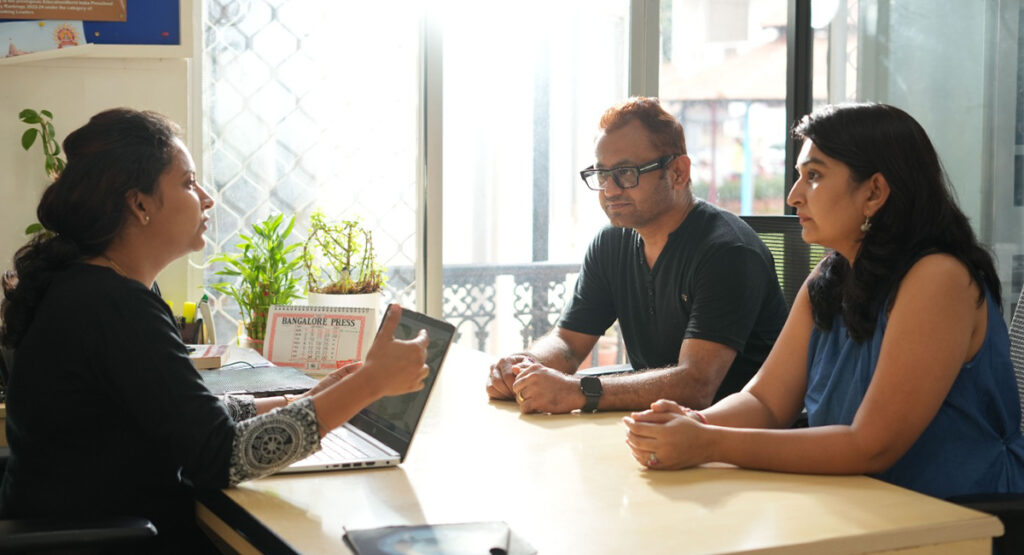
- Ask a teacher directly: “What have you noticed about them this term, beyond the marks?” It’s a simple question, and most teachers have an answer ready — they just aren’t always asked.
- Treat parent-teacher conversations as a chance to hear the story behind the grade, not just a recap of it.
- Pay as much attention to written comments and narrative feedback as to the score itself. That’s usually where the more honest picture is sitting.
How This Shows Up in the Classroom
In practice, a genuine holistic approach to teaching shapes the ordinary rhythm of a school day — how much weight participation carries, how collaboration is noticed and encouraged, how a teacher reads the room emotionally before deciding whether to push a lesson forward or slow it down.
It’s not a dramatic shift. It’s closer to a habit — treating a child’s engagement and wellbeing as worth watching just as closely as their answers. Multiply that habit across a full school, and you start to see how schools support holistic development of students as a whole, not just individual teachers doing their best in isolation.
FAQs
1.What does a holistic approach to teaching actually mean?
It means paying attention to a child’s emotional engagement, creativity, empathy, and classroom behaviour alongside academic performance — treating the whole child as the subject of observation, not just their test scores.
2.Why don’t report cards capture a child’s full development?
Report cards are built to summarize performance in a standardized, comparable format. That structure leaves little room for nuance — the social shifts, emotional cues, and behavioural changes a teacher notices day to day.
3.What kinds of things do teachers notice that don’t show up on a report card?
Things like a child going quiet in group settings, a sudden drop in the questions they ask, or a shift in how classmates turn to them for help — subtle changes that rarely fit into a graded format.
4.How can parents get a fuller picture of their child’s progress beyond grades?
Ask teachers directly what they’ve noticed beyond the marks, pay close attention to written comments, and treat parent-teacher meetings as a conversation rather than a formality.
5.Is holistic assessment replacing traditional grading in Indian schools?
Not entirely — but educational frameworks are pushing toward competency-based, holistic evaluation alongside traditional grading, recognizing that marks alone don’t reflect a child’s full development.
Conclusion
A report card is one page of a much longer story. Teachers see the rest of it every day, even when the format they’re handed doesn’t leave room for it.
A genuine holistic approach to teaching means treating that fuller story as just as important as the marks it eventually produces. The next time a report card comes home, it might be worth asking your child’s teacher what they’ve actually noticed this term — beyond what’s printed on the page.