
- November 18, 2026
- Vidyashilp School
A child stumbles over a math problem in the morning. Frustrated, stuck, ready to give up on the page.
By afternoon, that same child lines up a free kick on the football field and lands it clean. The confidence from that moment doesn’t stay on the field. It walks back into the classroom with them. This is really what co-curricular activities are for, and it’s worth understanding properly before assuming they’re just a break between lessons. Sport, performance and creative work all teach through experiential learning — children figuring things out by doing them, not by being told the answer.
Most ICSE schools list sports somewhere on their website. The real question for a parent considering good schools isn’t whether sports exist here — it’s whether the co-curricular life is genuinely structured, consistent, and built with intention, or just filled in around the academic timetable.
At Vidyashilp School, Bagalur, co-curricular activities aren’t scheduled as an afterthought. They sit in the weekly programme with the same seriousness as a math period, covering sport, performance, and creative work alike.
Why “Extra” Undersells Co-Curricular Activities
Calling something “extracurricular” suggests it’s optional, a nice-to-have once the real work of school is done. That framing doesn’t hold up well against the research.
Sports activities in school for students, and creative pursuits alongside them, are where a different, equally real kind of development happens: focus, resilience, the ability to recover from a setback and keep going.
A comprehensive review of school sports participation found a predominantly positive association with academic performance, specifically attention, working memory, executive function, motivation, self-esteem, and school engagement. Not just physical fitness. In other words, co-curricular activities don’t compete with academics for a child’s time and attention. They reinforce what happens in the classroom.
Sports — The Field as a Classroom of Its Own
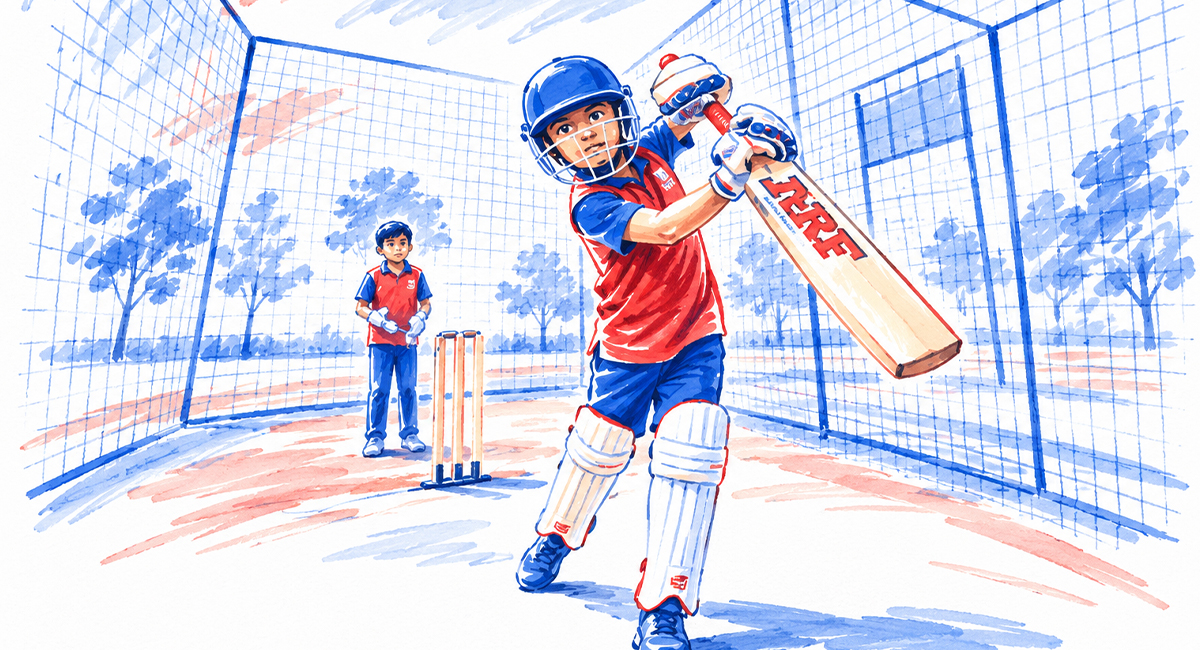
At Vidyashilp School, Bagalur, sports coaching covers cricket, athletics, football, and basketball, with physical education built into the regular weekly schedule rather than offered as an occasional activity.
Can sports improve academic performance? The research says yes, and fairly specifically. A systematic review of physical activity and academic performance in children found that gross motor tasks and team sports carry more cognitive benefit than light or unstructured play, precisely because they demand coordination, split-second decisions, and teamwork all at once.
A separate meta-analysis of chronic school-based physical activity found measurable improvements in cognitive flexibility, inhibitory control, working memory, and attention in children and adolescents who participated regularly. None of this is about raw fitness alone; it’s about what structured sport does to a child’s thinking capacity more broadly.
How Sport Helps a Child Handle Academic Pressure
How do sports help reduce stress in students? Physical activity has been shown to buffer the effects of stress on children’s cognitive performance, helping protect working memory and focus even when academic pressure builds.
A cross-sectional study of primary school children found something concrete here: students were less likely to report anxiety and irritability during academic work after physical activity, and settled into their studies with noticeably better focus as a result.
This is really why sports are important for students in a school setting. Not simply as a reward for finishing classwork, but as something that actively protects a child’s ability to concentrate for the rest of the day. A child who’s had a genuine outlet for physical energy and stress tends to come back to a desk steadier than one who hasn’t.
The Stage — Confidence Built in Public
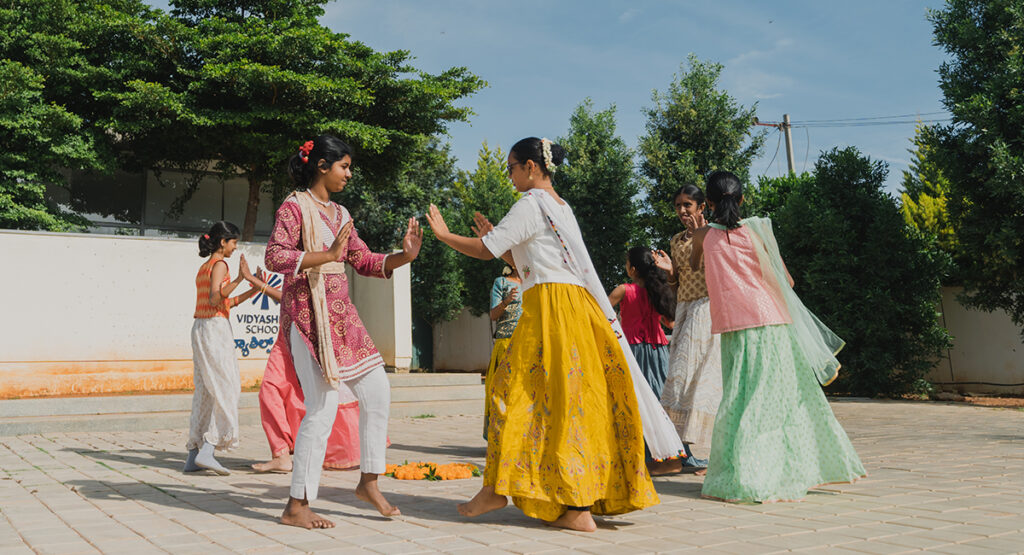
Beyond the field, Vidyashilp School, Bagalur has introduced theatre in education as a way of teaching socio-emotional skills, alongside dedicated public speaking sessions designed to build self-confidence and communication ability.
Dance and performing arts round this out, giving students a way to express feelings and experience the world around them through movement.
What performance builds is genuinely different from what a classroom lesson can offer: comfort with being watched, the ability to recover mid-performance when something goes slightly wrong, and a voice a child learns to trust in front of others. These are skills that get rehearsed, quite literally, on a stage, in a way that reading about confidence never quite replicates.
The Studio — Creativity as a Discipline, Not a Filler Period
Art at Vidyashilp School, Bagalur isn’t treated as a standalone subject squeezed in once a week. It’s integrated within the broader curriculum, alongside specific activities like basket weaving and rangoli, and creative writing holds a genuine place within the English curriculum rather than sitting separately from it.
Creative work of this kind carries its own discipline: patience with an idea that doesn’t work the first time, willingness to iterate, tolerance for a messy middle stage before something comes together. Working through why a design doesn’t quite hold up, or why a story’s ending feels flat, is critical thinking in a different outfit — the same habit of testing an idea, finding its weak point, and reworking it, just applied to a sketch or a sentence instead of a sum.
This connects directly back to the broader point about the importance of physical activities in schools alongside creative ones; both build a kind of resilience that pure academic instruction, on its own, doesn’t quite reach.
What a Genuinely Integrated Week Looks Like
Among sports and activities at an ICSE school in North Bangalore, what actually separates a well-structured programme from a token one usually comes down to consistency rather than variety.
At Vidyashilp School, Bagalur, classes run on a cooperative-learning structure — students seated in teams of four, with roughly 32 students per class. Co-curricular time follows the same intentional pattern, with these appearing regularly through the week rather than as one-off event days scattered across the term:
- Sport and movement: cricket, football, basketball, athletics, and yoga, included specifically for its effect on attention and concentration
- Performance: theatre, public speaking, and dance, built in as regular sessions rather than occasional showcases
- Creative and strategic work: art, music, and chess, with chess included for the structured thinking it demands
- Values and reflection: value education running alongside all of the above, woven into the week rather than taught as a separate block
For families asking about after-school sports activities for kids, the emphasis at the school leans toward regular, coached sessions built into the school day itself. That’s rather than relying solely on extended after-hours programmes — the kind of steady, repeated practice that research consistently links to real cognitive and emotional benefit, rather than occasional access to a long list of options.
FAQs
1. What indoor and outdoor games are available for students at school?
Outdoor offerings include cricket, football, basketball, and athletics coaching. Indoor activities include chess, which Vidyashilp School, Bagalur offers as a distinct part of its curriculum, alongside yoga sessions built into the regular timetable.
2. How do school sports activities contribute to student development and well-being?
Research links structured school sports to improved attention, working memory, and executive function, alongside reduced stress and anxiety during academic work. Beyond physical fitness, regular participation supports a child’s emotional regulation and day-to-day focus in the classroom.
3. What are the social benefits of school sports?
Team sports require coordination and quick collective decision-making, building cooperation and communication among students. These experiences translate into stronger teamwork skills and school engagement, both of which research links to structured sports participation.
4. What challenges do students face while participating in sports, and what steps does the school take to address them?
Children can find it hard to balance academic workload with sports commitments, especially during exam periods. Building sport into the regular weekly timetable, rather than treating it as extra time, helps keep physical activity consistent without it competing directly with study time.
5. How does Vidyashilp School, Bagalur integrate sports with the academic curriculum?
Physical education and sports coaching run alongside academics in the weekly schedule rather than as separate, occasional activities. This consistent structure reflects the school’s broader approach of treating co-curricular activities as integral to learning, not supplementary to it.
Conclusion
Co-curricular activities at Vidyashilp School, Bagalur run alongside academics with the same structure and intention, not as filler time between the subjects that “really” matter. A child who’s confident on a stage, settled after a match, and comfortable experimenting in the art studio is building the same underlying capability from several different directions. Not a set of separate, disconnected skills, but one steady foundation for holistic development — the physical, emotional, social and creative growth that a sports period, a rehearsal, or an art session each contribute to in their own way.
The clearest way to see what this actually looks like is to watch it happen. A sports period or a rehearsal in session tells a parent more about co-curricular activities at the school than any list ever could.
See a sports period, a rehearsal, or an art session in progress for yourself — talk to our Admissions Team to understand how Vidyashilp School, Bagalur runs.